Showing posts with label communicate. Show all posts

Saturday, December 23, 2017

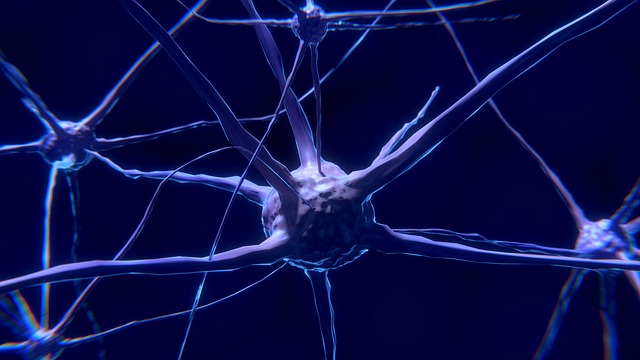
A Basic Explanation of How Neurons Communicate with Each Other


How we think, feel, sense, learn and memorize things, or basically know how the human brain functions or dysfunctions is not something we can easily comprehend until we learn and understand how exactly neurons communicate with each other.

A neuron (nerve) is basically a bundle of axons situated outside the Central Nervous System (outside the brain or spinal cord). This bundle of axons is referred to as a pathway or tract. The main function of neurons is to continuously gather information about the internal state and external environment of a person, carefully evaluate this information, and coordinate activities critical to the situation and the individual’s needs.

How do Neurons Connect with Each Other?

Basically, neurons connect by means of nerve impulses.

A nerve impulse is the transmission of coded signal from a specific stimulus along the neuron membrane from the point where it originally started. These nerve impulses can pass from one cell to another, creating a chain of information within a network of neurons.

The nerve impulses carried by the nerve cells are passed on to other nerve cells at gaps or junctions known as synapses. The impulses may be either directly transferred at electrical synapses or carried across the gap (a gap is created where there is no physical link between adjacent neurons) by neurotransmitters.

The human brain uses over 50 different neurotransmitters and the signals carried by some of these transmitters excite (make it more likely to fire a signal itself) their target cell while other slow down their activity (make it less likely to fire a signal itself).


Basically, using neurotransmitters allows the central nervous system to alter the way information is processed and passed on. In other words, neurotransmitters make it possible for the nerve impulses of one cell to influence those of another, thus allowing the neurons to communicate with each other.

Neuron Response

Neurons respond to various inputs depending on the pattern of activity and how recently a signal has been fired. Basically, each neuron acts like a pattern recognizer whose main responsibility is to respond to patterns of inputs from other neurons. According to scientists, a neuron might respond (fire) when you immediately recognize a familiar face, smell coffee, or remember something.

Surprisingly, when everything is working fine, activity in neurons takes place without us being aware. It’s more like an “unconscious activity.” However, a small part of neuron activity is said to compose your conscious thought process.

The main function of the nervous system is to control and coordinate body function, and also enable your body to respond to and promptly act on the external environment. Therefore, learning how neurons communicate with each other is the key to having a deeper understanding of the basic operation of your nervous system at a cellular level.

Tuesday, December 19, 2017

How Plants Communicate to Get Their Needs Met


Do plants communicate with each other? What's going on in their speechless yet dynamic world? Do they like some of their neighbors better than others? Are they able to ward off insect attacks? Over the past ten years, some fascinating research has delved into what's going on in plant communities and the interaction within and among different species of plants and even insects. Studies have also documented some lively communication between plants and microbes - such as fungi and bacteria - that share living space in the root zone of a plant. Other studies have proven that there are also above-ground mechanisms plants use to signal one another, often in times of trouble.

The world of the underground is an interesting place indeed, and there's a lot going on. In many cases, it's a very crowded environment, like the streets of New York City or the freeways of Los Angeles, with steep competition for limited space. But, plants have a distinct disadvantage that we don't have. They can't flee to the solace of a country home when times get rough, when water and food are in short supply, or when an enemy is lurking. They're rooted in the ground!

Can plants also protect themselves from populations of potentially deadly microbes? While we still have a lot to learn about these complex interactions, there are some answers. Plants have remarkable natural ways of fending for themselves. They often face an arsenal of attacking pathogens and win the battle by making their own chemical weapons that they secrete from their roots. On the battlefield, they form a 'front line' of detached but living cells (aptly called border cells) that give off a dizzying number of biological chemicals that thwart the advancing enemy.


Plants are dependent on 'good guy' fungi and bacteria that live in their root zones to provide biological control of diseases. That's why it's always a good idea to use non-chemical measures to prevent and reduce damage caused by diseases whenever possible, relying on chemical control only as a last resort. As we learn more about what makes plants 'tick' we can better appreciate the mutually-beneficial nature of plants and microscopic organisms. Fungi that form symbiotic relationships with plant roots in natural settings (mycorrhizae) have been found to enhance water and nutrient uptake of plants. The most common ones enter the root cell of an estimated 80-90% of trees, shrub, flower, grass and crop plant species found on earth.A fascinating form of plant-to-plant communication used to ward off insects involves 'conversations' between different plant species.

So this clearly shows that plants have an effective way of communication and they understand each other in a brilliant way. This communication is scientifically proven to be true.