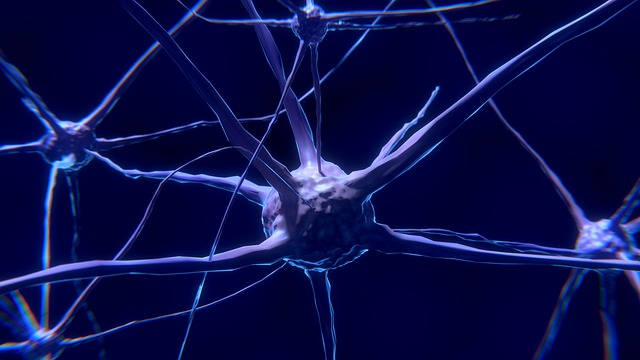
Showing posts with label brain. Show all posts

Tuesday, December 26, 2017

Why Do We Feel Nervous


It happens all the time. The butterflies in your stomach when out on your first date, when attending a job interview, preparing for an exam, getting married, meeting a business client for a business deal…the list is endless.

Of course, these events are normal parts of life and are natural reactions to stress. However, apart from being normal, they all have something in common- they invoke the feeling of nervousness.

Whenever you feel nervous, your heart starts beating at a faster rate…you start fidgeting…and butterflies fill up your stomach. Of course, we often assume it’s normal since it’s something that we have no
control over.

But even so, why exactly do we feel nervous? What is the science behind why we feel nervous?

According to science, the feeling of nervousness is basically a natural reaction to stress and a part of the flight or flight response.

When stressed, the neocortex triggers hypothalamus, which is a part of the limbic brain, and a signal is misperceived as though you are in some sort of danger, specifically because your brain does not consider your current condition as “normal.”

As a result, the hypothalamus triggers the fight or flight response which is regulated by a part of the autonomic nervous system referred to as the sympathetic nervous system and the adrenal-cortical system.

The sympathetic nervous system triggers the release of adrenaline and noradrenaline into the bloodstream, causing an increase in heart rate and blood pressure.

At the same time, the hypothalamus releases the corticotrophin-releasing factor into the pituitary gland which consequently triggers adrenal-cortical and causes the release of a number of hormones.

The brain then sends a signal from the pituitary gland to the adrenal glands which release the hormone adrenaline. Adrenaline’s main function is to redirect blood and energy to various parts of the body that will be required to take swift action. They include the heart, muscles, and processes such as digestion.

When blood flow is redirected from the stomach, the blood vessels in this region close, thereby causing a tingling sensation or what many people referred to as” butterflies in the stomach.”

So basically, the fight or flight response prepares your body for stressful situations which as a result cause the feeling of nervousness.


Surprisingly, each type of stress represents a nervousness or “threat” level ranging from mild to life threatening. This means that the weaker the perceived threat, the less intense the reaction to stress will be and vice versa.

According to James Stoiz, a social worker who specializes in anxiety, it’s actually good to have some level of nervousness.

“Nervousness is what keeps us from walking into the street with our eyes closed,” said Stoiz.

So how can we control our nervous feelings?

Well, according to Stoiz, there are several ways in which we can effectively control our nervous feelings regardless of the situation. He recommends regular physical activity such as exercises, deep breathing
exercises, counting down from 10, and visualizing success.

For example, Olympic athletes use mental imagery or “cognitive specific imagery” to lessen the feeling of nervousness before a competition.

Nothing kills confidence than being nervous. It’s quite an overwhelming feeling.

The good news however is that you can easily learn how to combat it to help enhance your confidence and increase your chances of success in many stressful situations.

How Optical Illusions Trick Our Brains


Optical illusions can be mind-blowing and it’s interesting how difficult it can be for us to figure them out or rather see through them. A good example of an optical illusion is the image below. This image is known as a Scintillating Grid Illusion.

A quick glance at the glance at this grid, you will see that some black dots appear to twinkle or glow (scintillate) in the intersections of white lines as your eyes make small, rapid movements. This effect is only possible when your eyeball is moving slightly while scanning the image.

The grid is said to induce an effect known as Lateral Inhibition.


How Does Happen?

When you look at an object, the light that bounces off from the object and enters your eye is converted into electrical impulses that your brain turns into an image that you can make out. This process takes place quite rapidly- about a tenth of a second. However, during the period, your eyes receive a constant stream of light and a continuous supply of information, which makes it difficult for your brain to focus all at once.

So to compensate the tenth of a second lag during processing and help you concentrate on what’s important, your brain takes shortcuts.

So optical illusions basically trick out brains by taking advantage of these shortcuts. In other words, optical illusions take advantage of how our eyes and brain process visual information as a way to trick us into seeing or not seeing certain images or patterns.

Most optical illusions also take advantage of other areas such as Peripheral Vision, Mental Filtering, and Blind Spot.


With peripheral vision, your brain takes in what exactly is in your peripheral vision when focused on one point, leaving out some details in the process. In the case of mental filtering, your brain makes assumptions based on expectations, what you’ve learned, and on memory.

In a blind spot, it’s impossible to make out anything that is in the spot as there are no cells to process whatever you’re seeing. Therefore, optical illusions take advantage of this where when you close your eyes and look at an object, something else in the blind spot mysteriously disappears.

From the look of things, it evident that vision doesn’t have everything to do with your eyes. Of course, it’s impossible to see without your eyes, but it surely wouldn’t make any sense without your brain’s involvement.

So basically, optical illusions trick our brains to perceive images, patterns, or color in a manner that differs from objective reality, which is strange and at the same time, incredible.

Does Photographic Memory Really Exist?


Does the “perfect memory,” also known as “photographic memory” really exist?

Well, there is an answer to this intriguing question.

Photographic memory is defined as the ability to recall any memory and experience, or rather visual information in great photographic detail.

The assumption of this unique kind of memory bears a lot of similarity with a photograph, in that an individual can take mental snapshots and recall these snapshots in great detail and without error. In other words, a person can retrieve a mental photograph from his/her memory and examine it in detail while zooming in on different areas.

However, scientists do not believe in the existence of photographic memory in this sense.

Proof Demonstration of Photographic Memory

To confirm that photographic memory does not exist, scientists have investigated this possibility. During the demonstration, people who claim to posses photographic memories are asked to read at least two lines of text and then report the text in reverse order.

So far, no one has been able to do this. According to the scientists, if they really have a photographic memory where their memory works like a photograph, then these people who have been able to report the text in reverse order without error.

A Memory Almost Similar to Photographic Memory Exists

While there is no evidence that photographic memory actually exists, scientists claim that most people have some kind of photographic memory.

For example, did you know that it’s easier to remember a picture in a book in more detail compared to the text in the same book? Have you ever wondered why most children’s book have more images compared to text?

Well, that’s the simple explanation.


It’s also evident that most of us remember a face much more easily than the name associated with that face. You are also more likely to remember the image on a billboard than the text written on it. This isn’t exactly photographic memory- it’s just a different type of memory that seems more or else similar to photographic memory.

How Does Photographic Memory Come to Be?

Even if its existence has never been demonstrated, scientists believe that it could be caused by a number of factors such as brain development, past experiences, genetics as well as how well one pays attention to material presented.

This means that how different individuals recall things is mainly dependent on these three factors. For example, a person who has encountered some extraordinary experiences may retain sharper memories that may linger for extended periods of time than a person who hasn’t.

Of course, there is a possibility of someone having the perfect memory out there- only that they haven’t been discovered yet. All in all, some people consider having such kind of a memory as a mixed blessing as while having a good memory prowess is great, recalling every single detail of your past, even the most damaging and painful past experiences may not be a good thing.

Saturday, December 23, 2017

A Basic Explanation of How Neurons Communicate with Each Other


How we think, feel, sense, learn and memorize things, or basically know how the human brain functions or dysfunctions is not something we can easily comprehend until we learn and understand how exactly neurons communicate with each other.

A neuron (nerve) is basically a bundle of axons situated outside the Central Nervous System (outside the brain or spinal cord). This bundle of axons is referred to as a pathway or tract. The main function of neurons is to continuously gather information about the internal state and external environment of a person, carefully evaluate this information, and coordinate activities critical to the situation and the individual’s needs.

How do Neurons Connect with Each Other?

Basically, neurons connect by means of nerve impulses.

A nerve impulse is the transmission of coded signal from a specific stimulus along the neuron membrane from the point where it originally started. These nerve impulses can pass from one cell to another, creating a chain of information within a network of neurons.

The nerve impulses carried by the nerve cells are passed on to other nerve cells at gaps or junctions known as synapses. The impulses may be either directly transferred at electrical synapses or carried across the gap (a gap is created where there is no physical link between adjacent neurons) by neurotransmitters.

The human brain uses over 50 different neurotransmitters and the signals carried by some of these transmitters excite (make it more likely to fire a signal itself) their target cell while other slow down their activity (make it less likely to fire a signal itself).


Basically, using neurotransmitters allows the central nervous system to alter the way information is processed and passed on. In other words, neurotransmitters make it possible for the nerve impulses of one cell to influence those of another, thus allowing the neurons to communicate with each other.

Neuron Response

Neurons respond to various inputs depending on the pattern of activity and how recently a signal has been fired. Basically, each neuron acts like a pattern recognizer whose main responsibility is to respond to patterns of inputs from other neurons. According to scientists, a neuron might respond (fire) when you immediately recognize a familiar face, smell coffee, or remember something.

Surprisingly, when everything is working fine, activity in neurons takes place without us being aware. It’s more like an “unconscious activity.” However, a small part of neuron activity is said to compose your conscious thought process.

The main function of the nervous system is to control and coordinate body function, and also enable your body to respond to and promptly act on the external environment. Therefore, learning how neurons communicate with each other is the key to having a deeper understanding of the basic operation of your nervous system at a cellular level.

Electroconvulsive Therapy - Is it an Ideal Treatment for Mental Disorders?


Formerly known as electroshock therapy and often referred to as shock treatment, Electroconvulsive therapy is a psychiatric procedure in which small electric currents are passed through the brain to intentionally trigger an epileptic seizure. This form of therapy is thought to cause changes in the brain chemistry which quickly reverse the symptoms of certain mental disorders.

Since its introduction in 1938, electroconvulsive therapy is the only form of shock therapy currently used in psychiatry. This therapy works when other treatments for mental illness have been deemed unsuccessful. It’s usually administered under general anesthesia as well as muscle relaxants which enable the patient’s muscles to twitch slightly and to prevent the body from convulsing during the electrical seizure.

Why is Electroconvulsive Therapy Done?

ECT is used to treat:

  • Treatment Resistant Depression or rather depression that hasn’t improved with medications and other types of treatments.
  • Severe depression which is accompanied by psychosis (refusal to eat and desire to commit suicide).
  • Catatonia which is a condition characterized by fast or strange movements, lack of movement, lack of speech, and other symptoms.
  • Severe Mania whose symptoms include hyperactivity, a state of intense euphoria, and agitation.
  • Aggression and agitation in people with dementia.
  • Women suffering from postnatal depression.

How is ECT Performed?

Before ECT is administered, the patient is sedated with a general anesthesia and a muscle relaxant to prevent movement during the treatment. During the procedure, electrodes are placed at strategic points on the head and a controlled electric current is applied. The electric current causes a seizure that often lasts less than a minute. The procedure is not painful, thanks to the anesthesia and muscle relaxant. The patient’s heart rate, breathing, and blood pressure is carefully monitored throughout the entire procedure. This treatment is administered approximately three times a week until the patient’s symptoms improve.


Does ECT Really Work?

A survey conducted by an ECT Accreditation Service which is run by the Royal College of Psychiatrists in 78 ECT clinics in both England and Wales between 2012-2013 reported the following results.

Out of the 1895 courses of treatment administered in 1789 people,

  • 1712 of the people showed significant improvements.
  • 113 people did not show any improvements.
  • The symptoms became worse for 28 people.

Of course, the treatment doesn’t work for everyone but these statistics are pretty impressive.

ECT Possible Side Effects

The most common side effects associated with ECT include;

  • Memory loss (short-term).
  • Headache.
  • Muscle aches.
  • Upset stomach.

These symptoms improve over the days and weeks following the end of the treatment. Just like other treatments, Electroconvulsive therapy does not work overnight. It will take a few sessions of treatments to show some improvements.

Overall, it’s a great treatment alternative and most people consider it as the most useful treatment they have ever had. Furthermore, it is non-invasive and does not cause severe side effects.

Wednesday, December 20, 2017

Brain Is Designed To Forget Unimportant Details On Purpose


Brain is defined as the central organ of the human nervous system. The brain together with the spinal cord makes the central nervous system; its main function is to control the motor function and body balance. It also interprets information sent to it by various body organs i.e. eyes, ears, and other sensory organs.

Recent studies from the University of Basel in Switzerland tend to suggest that our brains are designed to constantly and actively forget unimportant details on purpose while in normal circumstances it should improve human memory recall of experiences for ultimate survival. In a general note, memory formation entails registering, processing, storing and retrieving information for later reference.

The following factors have been confirmed to contribute the above scenario.

Attention

Attention guides a human being’s focus into identifying what is relevant and what is not; as a result, we pay much attention to intriguing occurrences which are mind boggling and surprising. A human brain knows how to identify and categorize these occurrences. Unimportant events or occurrences will not be given much attention therefore easily lost in the brain.

Consolidation of memory

A human brain is divided into long and short term memory compartments. Most of the information that the brain picks is always forgotten and never makes it to long term memory compartment. When a brain encounters complex situations e.g. solving mathematical equations, it will free up its short term memory so as to take in the new information, simultaneously the short term memory will be lost on purpose.


Memory recall

Painful emotional occurrences are categorized into physical and emotional pain. In the human brains, emotional pain tends to remain in the memory for quite a long time than physical pain; as a result, an instance of physical pain may be forgotten quickly than an instance of emotional pain.

Blanking Out

Stressful conditions can lead to memory loss or deficit i.e. mental blanking during strength draining conditions like examination, thinking and worrying too much about an expected outcome will create anxiety which in turns will hamper your decision making capabilities. In this case the brain may forget most of its recent memory additions.

In simple terms, forgetting is the inability to remember already encoded and stored details in the brain. Psychologists and medical practitioners agree that forgetting is not a medical condition and may be as a result of the factors discussed above. It is a known fact that human beings cannot retain all that they have learnt or seen, much is forgotten. In some instances, what we think is forgotten may not be true, but just lack of coordination of sense organs.